Showing posts with label Grammar. Show all posts

Wednesday, March 1, 2017

False Friends English - Spanish #2

Hi everyone and welcome back!

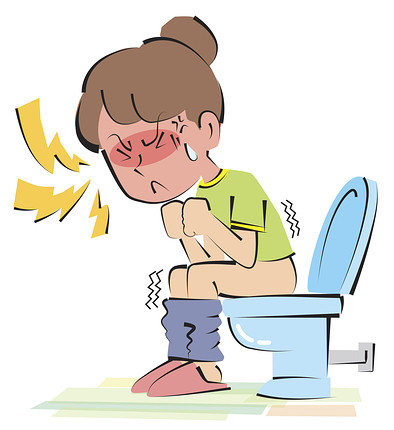
Today's post will be about two false friends that English and Spanish have and so many times Spanish speakers have made mistakes with these words. I remember one day, when one of my student sent me a message in Whatsapp telling me: "Sorry, Denis, I don't feel well today and I'm constipated...". Of course, English speaker will think, that she might have this, as you can see on the right picture.

But I understood her, that she literally translated the Spanish word constipado into constipated, and these two words are similar, but their meanings are absolutely different!

If I say "I'm constipated"(Estoy constipado) in Spanish. it means that I have flu, I'm sick, I've got cold and don't feel well, as on the left picture. But the same phrase in English has absolutly different meaning. If we say "I'm constipated", it means in Spanish "Estoy estreñido".

So sometime literal translation from Spanish into English can be a little bit dangerous, because we can missunderstand you!

Wednesday, February 8, 2017

False Friends English - Spanish #1

Hi everyone and welcome back!

Having so many Spanish students, I've noticed that almost all of them like to include some words that are absolutely identic but have different meanings in English and Spanish. Sometimes it was even very confusing, because I missunderstood a person, I couldn't even imagine what that person meant. Now I'd like to make it a little bit clear by preparing this posts about False Friends in English and Spanish. So let's begin with the first group of false friends!

The Menu VS El Menú

The word "menu" in English means "la carta", so basically it´s the list of the food that restaurants offer. In Spanish the same word "el menú" refers to the first plate, second plate and dessert. So this idea of "menu" doesn´t exist in English, sometimes you can find something like a "set menu" which includes things described in "el menú".

                                  The Menu                                                                      El menú


Tuesday, April 19, 2016

FCE-CAE exercises

Hi everyone and welcome again!
Today I prepared for you some exercises that I use with my students to prepare for First Certificate and Cambridge Advanced exams. Very soon all students are going to do these exams and it's necessary for them to practice a lot. So here you have some exercises to do.
Enjoy it!

Conditional sentences. Part #1

Hi everyone and welcome again!

conditional sentences
I love to share my teaching materials that I prepare for my students. Today I present you some explanations about Conditional sentences. I think, this is one the most difficult part of English grammar for Spanish students because of different tenses and logic that are used in English conditional. Each time we learn this topic, students always have some doubts even after the explanation. 

To begin with, here you have my written materials of conditional types, I prefer to use 4 types inculding zero conditional as a specific type but very related with the first one. I like to use schemes to explain briefly and at the same time completely things and ideas. Tomorrow we will see with you specific cases and on Thrusday we will learn about Mixed conditional. Enjoy it!

The Conditional Type:

0      Zero Conditional
Nature: The condition is possible (natural, physical, scientific facts)
Time: present (simple)
Structure: If + Present Simple/ Present Simple
Example: If you heat water to 100 degrees, it boils.

1      First Conditional
Nature: Open condition, what is said in the condition is possible.
Time: present or future time
Structure: If + Present Simple/ will + inf / present tense / imperative
Example: If he is late, we will have to go without him.
If my mother knows about this, we are in serious trouble

2      Second Conditional
Nature: unreal or improbable situation
Time: the tense is past, but we are talking about the present, now
Structure: If + Past Tense/ would + inf
Example: If I knew her name, I would tell you.
If I were you, I would tell my father.

3      Third Conditional
Nature: unreal situation (no chance)
Time: the tense is past, we are talking about what could be in the past
Structure: If + Past Perfect Tense/ would + have + (past form of verb –ed or 3rd)
Example: If you had warned me, I would not have told your father about that party.(But you didn't, and I have)

Tuesday, April 12, 2016

BE vs BEING - qué diferencia?

Hi everyone and welcome again!

Esto es mi primer artículo en español para mis alumnos que estudian inglés. Why in Spanish? (Porqué en español?) - porque quiero que este artículo lea más gente para entender la diferencia y para que la explicación sea más entendida por los visitantes de esta web.

Desde el primer día que aprendimos inglés siempre había una regla que el vebro "to be" siempre está en forma simple (Present Simple, Past Simple, etc.) y nunca en forma contínua. Pero a veces la gente puede oir casos cuando alguien dice "He is being very bad today" y en este caso piensan que hubo un error o algo parecido pero en realidad hay casos cuando podems utiliar la forma "to be being".

Entonces, me podrian dar diferencia entre be y being con ejemplos - sería la pregunta? En realidad la gran diferencia entre "He is bad" y "He is being bad" no es tan difícil de entender. La forma en Present Simple del vebro "to be" significa que estamos describiendo la personalidad de una persona, porque Present Simple describe la constancia perpetua de una cosa o un sujeto. Por lo tanto, si decimos que "He is stupid" - en este caso hablamos de que él es tonto siempre y generalmente. En el caso de "He is being stupid" estamos describiendo el comportamiento en cada caso concreto. No hace falta decir "He is being stupid today", la forma "being" es suficiente para entender que en este caso él comportó como estupido. Y lo mismo ocurre en el pasado y en el futuro con la misma idea.

Para entrar en el  detalle os recomiendo este vídeo donde también se explica bien estas diferencias:


If you're thinking to start learn English online, you can see all the information HERE
Si queréis aprender inglés por Skype, podéis mirar toda la información AQUÍ

Thursday, March 10, 2016

English class 10.03.2016

Hi every one and welcome again!
Today's class we dedicate for practicing more exercises of FCE:

Wednesday, March 2, 2016

English articles - main review

Hi everyone and welcome again!
Today I want you to present my materials that I use to explain my students about articles in English. All students got some problems with them, so I decided to start a line of explanations to give a good understanding of English articles. 
To begin, I publish this file and share it with you so you can get a global image of articles and soon we will start with detailed explanation of them. 
Enjoy it:

Friday, February 12, 2016

English prepositions - hints to learn

Hi everyone and welcome again!
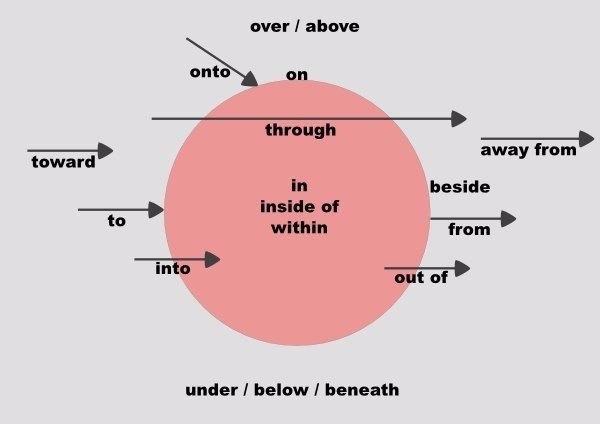
Today's topic will be related with prepositions. That's the first post about this part of English grammar. Everybody knows people have some troubles with English prepositions but actually there is nothing to worry about. Here I want to present you a good picture that explains the meanings of prepositions:
1455058492187115362
It is very visual and I hope you can understand it.
What kind of doubts do YOU have about preposition in English? - Write me a question and I will answer you!